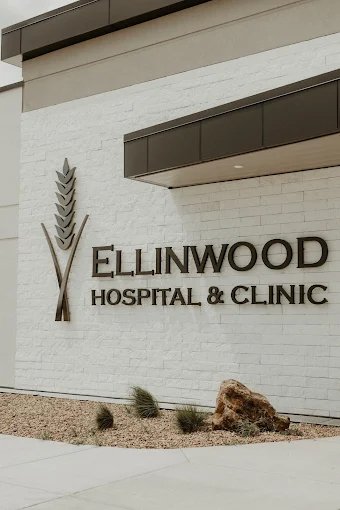
Ellinwood Hospital & Clinic will host a free Brain Health Day on Thursday, July 30, offering community members an opportunity to learn more about cognitive wellness and receive a complimentary memory screening. Michelle Niedens, L.S.C.S.W., Director, Cognitive Care Network from the KU Alzheimer’s Disease Research Center, will be conducting these screenings on-site at Ellinwood Hospital & Clinic.
Appointments will be available from 8 a.m. to 5 p.m. at Ellinwood Hospital & Clinic. The event is designed to help individuals better understand changes in memory and thinking while providing education about maintaining long-term brain health.
As people age, it is common to have questions about memory, concentration, and cognitive function. Early identification of potential concerns can help individuals and families access resources, develop care plans, and take proactive steps to support overall wellness.
Brain Health Day is open to anyone who has noticed changes in their own memory or thinking, is concerned about memory changes in a loved one, or simply wants to learn more about supporting healthy brain function.
Participants will meet one-on-one with trained health-care professionals in a comfortable, confidential setting. The screening is not intended to provide a diagnosis but can serve as an important first step in identifying concerns and determining whether additional evaluation may be beneficial.
“Taking care of our brain health is just as important as taking care of our physical health,” said Rachelle Stratmann, clinic manager at Ellinwood Hospital & Clinic. “Our goal is to provide education, support and resources that help individuals and families make informed decisions about their health.”
There is no cost to participate, but appointments are required.
To schedule a screening, contact Rachelle Stratmann at 620-564-2548.
Ellinwood Hospital & Clinic is committed to providing high-quality health care close to home while helping patients and families navigate every stage of life with confidence and compassion.
National facts about Alzheimer’s Disease
There are 7 million Americans that have been diagnosed with Alzheimer’s.
By 2050 it is projected to grow to included 13 million Americans.
Between 2000 & 2021 deaths from Alzheimer’s grew by 141%.
Alzheimer’s kills more than Breast Cancer & Prostate Cancer combined.
Here are some other facts about Alzheimer’s & Dementia in Kansas
As of 2023, an estimated + 60,000 people in Kansas have been diagnosed with Dementia and/or Alzheimer’s disease. This is an increase from the 55,000 people who were living with Alzheimer’s in 2020. This doesn’t count those that have not yet been discovered & diagnosed or reported to KDHA.
By the end of 2026 those diagnosed with Alzheimer’s will have grown to 64,000 (an increase of nearly 13% between 2020 - 2026
The state Medicaid program spends $543 million on Alzheimer’s.
The diagnosis of Alzheimer’s and/or Dementia involves interviews, wellness checks, memory tests, lab tests, a lumbar puncture and brain scans.
There is a shortage of providers in the aging, disability, and public health networks when it comes to Alzheimer’s.
What’s the difference between Alzheimer’s and Dementia?
Dementia is an umbrella term for a decline in mental ability severe enough to interfere with daily life, while Alzheimer’s is a specific disease. Think of it like a rectangle (dementia) and a square (Alzheimer’s): all Alzheimer’s is dementia, but not all dementia is Alzheimer’s.
Dementia: The Umbrella Term Dementia is not a single disease, but a broad category of symptoms that affect memory, thinking, and social abilities. It can be caused by various underlying conditions. Common types of dementia include: Alzheimer’s Disease: The most common cause (60% to 80% of cases). Vascular Dementia: Caused by reduced blood flow to the brain (e.g., from strokes). Lewy Body Dementia: Caused by abnormal protein deposits in the brain. Frontotemporal Dementia: Impacts the frontal and temporal lobes, causing early changes in behavior and personality.
Alzheimer’s Disease: A Specific Condition Alzheimer’s is a progressive, irreversible brain disorder characterized by the abnormal buildup of proteins (amyloid plaques and tau tangles) that destroy brain cells. While dementia symptoms vary, Alzheimer’s usually follows a predictable pattern:
Early Stage: Difficulty remembering newly learned information (as it targets the learning/memory centers of the brain).
Middle Stage: Increased confusion, poor judgment, and behavioral changes.
Late Stage: Severe difficulty swallowing, communicating, and managing physical bodily functions.
Alzheimer’s facts & figures by counties in central Kansas
Percentage of population likely to have Alzheimer’s age 65 and older, and the seven counties in central Kansas seem to have a higher rate than our statewide average (11.2%)
Barton County – 11.7% of the age 65 + (5,280) population (ranked 47th out of 105 counties)
Rice County – 11.6% of the age 65 + (1,861) population (ranked 50th)
Stafford County – 12.3% of the age 65 + (886) population (ranked 28th)
Pawnee County – 12.0% of the age 65 + (1,419) population (ranked 35th)
Russell County – 12.0% of the age 65 + (1,672) population (ranked 35th)
Rush County – 11.9% of the age 65 + (714) population (ranked 39th)
Ellsworth County – 11.5% of the age 65 + (1,455) population (ranked 56th)
Target patients in central Kansas – 13,287 residents in central Kansas age 65 & older