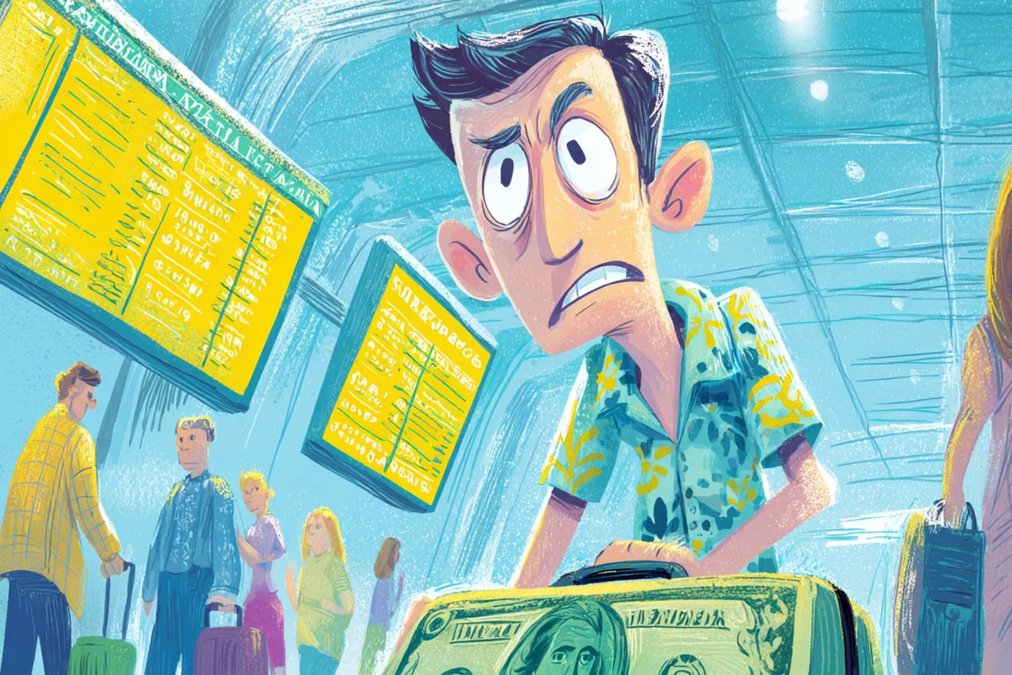
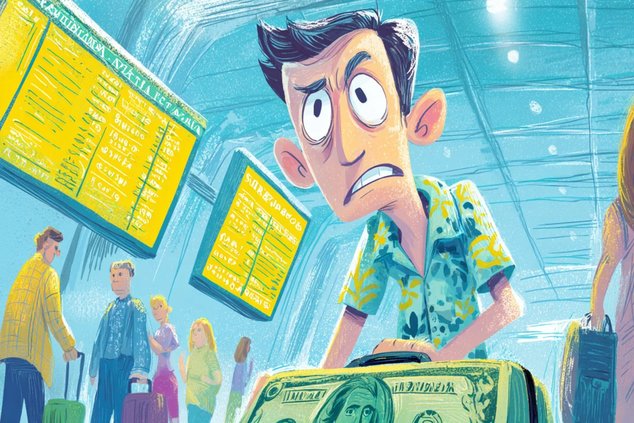
There’s a new milestone in American air travel: checking your suitcase may now cost more than your seat.
Earlier this month, United Airlines raised its fees for the first checked bag at the airport to an eye-popping $50. Delta Air Lines and Southwest Airlines followed last week, upping their luggage fees by $10 to $45. The airlines blamed higher expenses related to the war for the increases.
That’s nonsense. Oil prices are nowhere near where they were when airlines invented these irritating fees. When they slapped a $15 surcharge on checked luggage 18 years ago, crude oil was trading around $120 a barrel and climbing. Today, even though fuel prices are lower, airlines charge $50 for the same service.
I’ve spent years documenting what happens to travelers when the rules bend in favor of the airline industry. Here’s what I’ve learned: Bag fees never go down. Elliott’s Rule of Luggage says fees rise when oil goes up, and they rise when oil goes down. They rise when courts rule against regulators and they rise when Congress does nothing.
The only direction is up.
How we got here
This started with American Airlines back in 2008, when it imposed a $15 fee on checked bags, claiming higher fuel costs forced its hand.
That was a half-truth, at best. Airlines hedge their fuel, a practice where they use financial contracts like oil futures to lock in a specific price for jet fuel in the future, serving as an insurance policy against price volatility. So it would have been more accurate to say that fuel costs would be higher at some point.
Still, sensing a revenue opportunity, every other legacy airline followed American’s lead. And just like that, something that used to be included in the price of a ticket became a separate transaction.
Oh, and a profitable one. Baggage fees brought in an extra $7 billion in revenue in 2024, the last year for which numbers are available.
For years, Southwest Airlines resisted this trend. Its “Bags Fly Free” policy was a genuine differentiator — and a genuine rebuke to its competitors.
Then, in 2025, under pressure from Elliott Investment Management (no relation), it ended the policy for base fares, and the last holdout folded.
While no one was looking, JetBlue pioneered something even more creative: surge pricing for luggage. Its fees fluctuate based on demand — higher during summers and holidays, when you’re least able to avoid flying.
There’s so much innovation going on!
The court ruling that changed everything
In April 2024, the Biden administration’s Department of Transportation issued a rule requiring airlines to disclose all fees — baggage, change, cancellation — upfront, before purchase. It helped passengers figure out the true cost of flying before they clicked the “book” button. That made sense to passengers, but not to airlines, who saw their revenue stream threatened.
In February, the Fifth Circuit Court of Appeals vacated the rule in Airlines for America v. DOT, finding that the agency had overstepped its authority. The court said it couldn’t mandate blanket fee disclosures.
Within weeks, United raised its bag fee by $10.
Here’s the part that should make every traveler furious: The DOT rule didn’t ban fees. It didn’t even cap them. It just said: Tell people what they’re paying before they buy. Apparently, that’s too much to ask.
A bill that could fix this
There’s a legislative solution. Sen. Edward Markey and Rep. Steve Cohen have co-sponsored the FAIR Fees Act — the Forbidding Airlines from Imposing Ridiculous Fees Act — which would require that ancillary fees be “reasonable and proportional” to the actual cost of providing the service.
It’s a sensible bill. It’s also been introduced before but was never cleared for takeoff. The airline lobby is well-funded, and Congress has no appetite for airline consumer protection.
But here’s the data-driven case for why the FAIR Fees Act matters: If bag fees were actually tied to operating costs, United’s luggage fees would not be rising now. These surcharges have become almost entirely untethered from the cost of moving your bag.
There’s no law that says a baggage fee can’t be $75, or $100, or whatever the market will bear the day you forget to pack light. There’s no law that says checking your suitcase can’t cost more than your airline ticket.
What you can do right now
So how do we end this madness?
First, with midterm elections on the horizon, this is a great time to let your elected representative know that the FAIR Fees Act is a good idea. In an election year, they just might listen to you.
Also, stop assuming bag fees are fixed — JetBlue’s dynamic pricing means it pays to book early and check the fee at the time of purchase. Third, pack light or carry one of those credit cards that offers a “free” first checked bag, although I strongly prefer the former option. Those co-branded cards often come with hefty annual fees and can also be habit-forming, creating an unhealthy addiction to an airline’s loyalty program.
But don’t get comfortable. Elliott’s Rule says the only direction for checked bag fees is up.
Christopher Elliott is an author, consumer advocate, and journalist. He founded Elliott Advocacy, a nonprofit organization that helps solve consumer problems. He publishes Elliott Confidential, a travel newsletter, and the Elliott Report, a news site about customer service. If you need help with a consumer problem, you can email him at chris@elliott.org.