“It wrecks your whole family.”
Those words, uttered by a woman I was interviewing as she told me her breast cancer story, hit me with such a force – a force I didn’t quite understand. She’s currently undergoing her second round of chemotherapy in her own cancer journey and her words struck me in an almost physical manner.
Why? Two weeks ago, I lost my dad to cancer.
I spent years watching him fight. I sat hospital rooms or waiting room while he endured treatments we hoped would give him more time. And I sat helplessly as the man I had always turned to for answers grew weaker, until there were things neither his determination nor our love could fix.
Since we spoke, I haven’t been able to get her words out of my mind. Although I was living it, I had yet to identify it.
Her words described something families often struggle to explain. Cancer happens inside one person’s body, but its effects reach everyone who loves that person in ways that can’t be undone.
My dad went from golfing three times a week and building my sister a garage, to weighing barely 100 pounds and bedridden during his four-year battle with a recurring form of lymphoma. The changes were sudden and agonizingly slow, both at the same time. Unless you’ve watched a loved one undergo that transformation, it’s hard to describe.
But watching your loved one waste away and die changes you as a person and it changes the entire dynamic of your family. My dad was always independent and suddenly he was forced to rely on me to drive him to appointments and treatment. Always protective of his daughters, I struggled to balance his right to self-respect with his need for assistance in daily tasks. While I know he sometimes lost his respect for himself as he leaned on me for support, it was in those moments that I somehow felt the most respect for him.
On July 20, I made another of those trips, and I sat in the waiting room for eight hours while he received treatment. I never doubted it was going to work. Why wouldn’t it? It worked the previous three times; I couldn’t even fathom this would be any different. When he came out, he had so much energy and was in such good spirits that my positive outlook was affirmed. It was going to be OK again.
A few days later, my mom told me he wasn’t able to get out of bed. How did we go from so much energy to bedridden in days? How was that possible? We made a trip to the emergency room where the provider recommended hospice. I couldn’t believe it. Was she honestly recommending we just give up? I felt like I couldn’t breathe as I looked at my mom to see what her answer would be. This is my dad, my hero, the man I’ve admired for 56 years. Why were we being forced to make choices no one should face faster than I could process it? What was happening, and most importantly, why?
When his oncologist told him the chemotherapy was killing him, he was so angry. My dad was a fighter; I had never seen him give up and he wasn’t ready to admit defeat yet. This time, his determination and work ethic didn’t matter. Cancer won.
I couldn’t imagine what he had to be feeling, processing that this was it. He was going to die. All the pain and suffering he had undergone for four years wasn’t enough to save him, not this time.
As his oncologist left the room, he shook my dad’s hand and told him it was a pleasure knowing him. It sounded so final and I wasn’t ready to say goodbye. On the many nights I haven’t been able to sleep since, I wonder: if I hadn’t taken him to that last treatment, would we have had more time?
For the next almost seven weeks, he was confined to a hospital bed in the living room, right beside the chair in which he sat for countless family gatherings and holidays over more than five decades. From that chair, he watched his family grow. From that chair, every single person in our family received advice from the man we trusted more than anyone. From that chair, he told the stories we will remember forever.
We continued to watch my dad grow smaller and weaker, eventually losing the ability to even speak. But the hardest part was knowing who he had always been — capable, protective, the person who could fix almost anything — and realizing this was something he could not fix. We could not fix it for him, either.
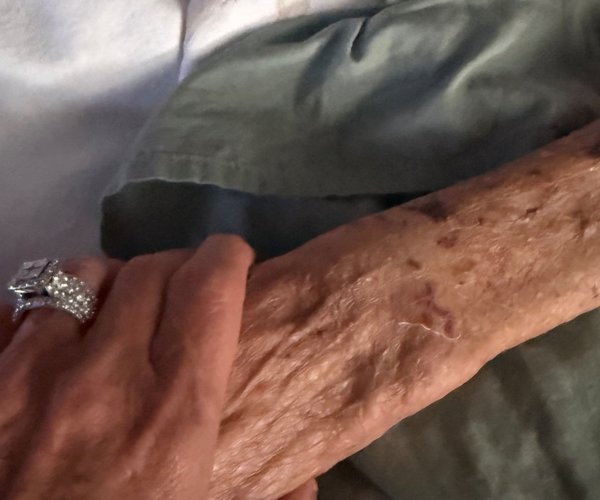
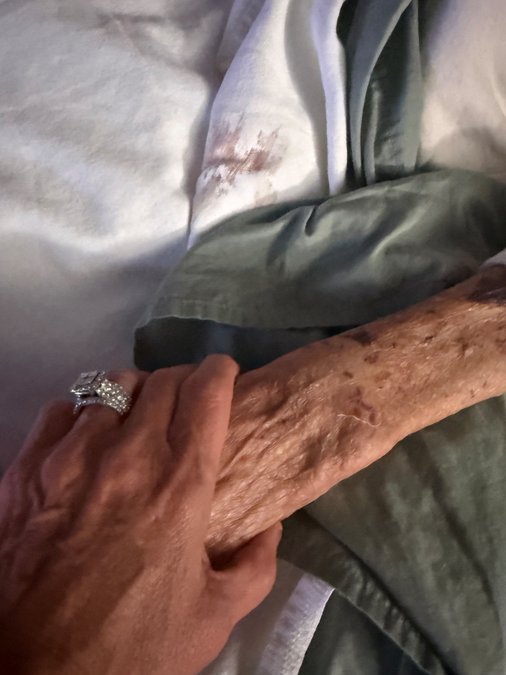
The night he died, I held his hand as a nurse wrapped a wound on his arm. His eyes were clouded over and as I spoke to him, I could feel he was slipping away from us. I knew that would be the last time I would ever see him.
His loss has irrevocably changed our family. It will never be the same. But even before that, I watched as the cracks formed in its foundation. I watched as roles changed, hopes diminished, and reality refused to be denied.
I watched my children say goodbye to the only father figure they had growing up, to the man who supported them from the bleachers for so many years. I watched my grandchildren be introduced to the harsh realities of a cruel disease at such a young age. I watched my mom say goodbye to the love of her life, someone she shared 66 years with. I watched my husband struggle to find the words of support he knew I needed.
I watched our family get wrecked.
And I hope, in time, I’ll watch it get rebuilt.
I cannot know exactly what the woman I interviewed and her family are feeling as she continues treatment. But I understand why she said cancer wrecks the whole family. I understand the fear, the helplessness and how fiercely you can love someone while being unable to make them well.
When we ask how a person with cancer is doing, perhaps we should also ask how their family is holding up — and stay long enough to hear the answer.
Yvonda Freeman is a reporter at the Great Bend Tribune. Send email to yfreeman@gbtribune.com.