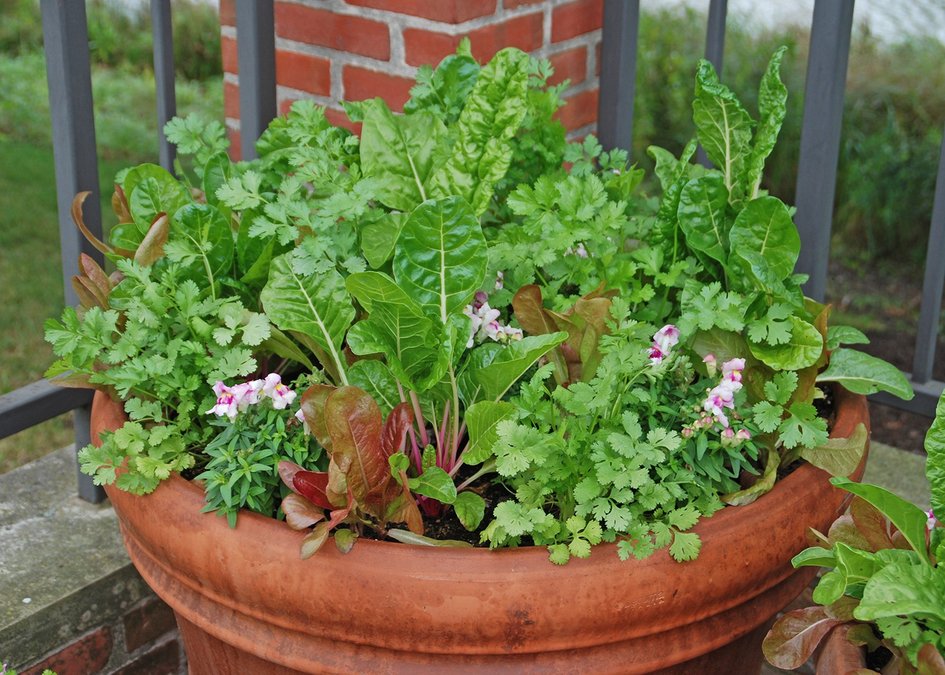
Make it fun and convenient to add some homegrown flavor to cookouts, garden parties and meals. Grow a few herbs in containers on a patio, deck or balcony.
Set a pot near the grill and fill it with favorite grilling herbs. Include some barbeque rosemary known for its especially good flavor and aroma suited to cooking. Plus, the strong stems make the perfect skewer, something guests are sure to remember.
Grow herbs like basil, marjoram, oregano and thyme for seasoning vegetables when grilling. Use pots of these and other favorites, like chives, set on the table as an edible centerpiece. Include snips and suggestions for guests to use for seasoning their own dishes.
Dress up beverages with fresh herbs like mint or basil in lemonade. Grow lemongrass as a vertical accent in containers and boil the stalks to make hot or iced tea. Use thyme as a trailer in containers and pair it with citrusy drinks or gin, vodka or bourbon for an earthy and minty enhancement. Sweeten beverages with fresh stevia leaves. Use them to create a simple syrup, steep into tea or muddle with other herbs to flavor drinks.
Enjoy their added flavor in beverages, entrees and desserts and a variety of health benefits they provide. Benefit from the anti-inflammatory effects of basil and rosemary, vitamins and minerals in thyme, antioxidants in mint and calming effects of lavender.
Most herbs prefer full sun and well-drained soil, but some, like mint, thyme, chives, parsley and lemon balm, will tolerate some shade. A bit of afternoon shade is welcomed by many sun-loving plants growing in hotter regions. Check the plant tag or seed packet for detailed planting information.
Grow herbs in containers that have drainage holes and are filled with a quality potting mix. Incorporate a certified organic and sustainable amendment, like Wild Valley Farms’ wool pellets (wildvalleyfarms.com). This soil amendment made from wool waste reduces watering by up to 25%, adds nutrients, organic matter and increases air space for better plant growth.
Grow individual plants in their own container or combine several in one pot. Place three to four plants in a 10- to 12-inch pot, four to six in a 14-16-inch container and six to eight in a 16 to 20-inch planter. Adjust this number based on the size of the transplants used and the mature size and growth habit of those included.
Harvest a few leaves and stems as needed throughout the growing season. Regular harvesting encourages more growth for the future. Herbs have the most intense flavor when harvested just before flowering. However, the flavor and pollinators that visit can still be enjoyed once flowering begins. Most herbs’ flowers are edible but be sure to check before adding any to beverages and meals.
Using herbs to flavor dishes and beverages makes every meal a special occasion. Plus, family and friends will have fun seasoning their meal with tasty fresh herbs within easy reach.
Melinda Myers is the author of numerous books, including Small Space Gardening. Myers web site is www.MelindaMyers.com.