The area newspapers of the 1920s referred to a “Real Resort” in Barton County, a place with lush greenery of trees, shrubs, and grass and the bright blue of the lake that would eventually become Lake Barton. The April 17, 1922, edition of the Great Bend Tribune first hinted at the Missouri Pacific Railroad purchasing property three miles south of Hoisington to build a 90-acre reservoir. Land was purchased from F. J. Haberman and Rudolph Steuri. According to the deed transferring the Haberman property, the nearly 120 acres were purchased for $10,000 on April 19, 1922. The Steuri property, on the Walnut Creek, consisted of two acres and was sold for $300. The newspaper editor stated that the reservoir would encompass 90 acres, hold 225 million gallons of water, and cost $300,000 to build.
On the Steuri property, a 6-foot dam would be constructed in the creek, where four pumps would be installed to pump water through a 24-inch pipe to the reservoir several miles north. “A house will be constructed near the creek for the man in charge of the pumps. The dam will be equipped with a flood gate and when the water in the creek is low, the gate will be lifted, thereby affording the normal flow of water and not interfering with residents along the creek who use the water for feeding purposes or for other uses. The water will be pumped from the creek only at times when it holds more than the normal flow of water.”
The article went on to say that the reservoir would range from a few feet to a depth of 35 feet. A large dam would be constructed at the north end to allow water to flow by gravity to Hoisington, for use in the steam locomotives as well as other purposes at the roundhouse. The editor then stated that in other places where the railroad had such reservoirs, “boating, swimming and fishing and … the impetus of forming country clubs” was allowed for the citizens of the area, but application would need to be made to the railroad for permission.
By July 1924, the lake, which had been used by employee families, was closed to the public and open only to those who held membership in the Barton County Club, with a $10 membership fee and annual dues of $10. The first meeting of the Barton County Club was held on June 23, 1924, in the old Cheyenne Club Rooms. Great Bend Judge D. A. Banta presided at the first meeting, with F. E. Childs of Hoisington elected president. Other charter board members included J. S. Morrison, Sr., vice president; Ralph B. Call, Hoisington, secretary; and C. P. Munns, Hoisington, treasurer. Gaylord Beard was employed as caretaker.
Later in 1924, the Hutchinson News reported that a big ice harvest was under way in December. Chas. Hulme of Great Bend was contracted to cut the ice from Lake Barton and load it onto rail cars for use in icing melons and fruit during the summer season. It was estimated that 20,000 to 25,000 tons of ice would be harvested from the lake and stored in the big icehouse in Hoisington. The article reported that as many as 200 cars could be iced in a day.
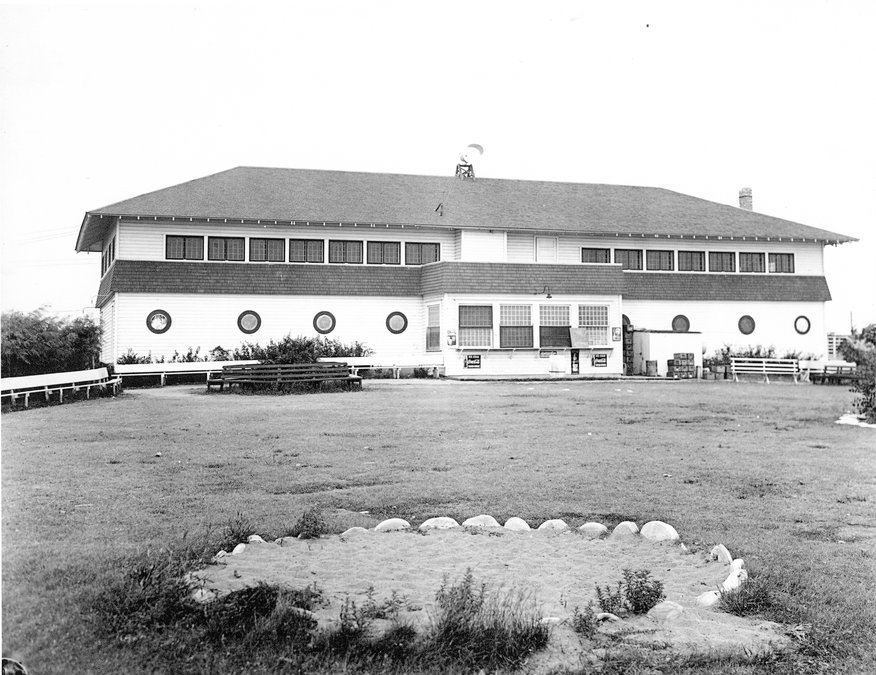
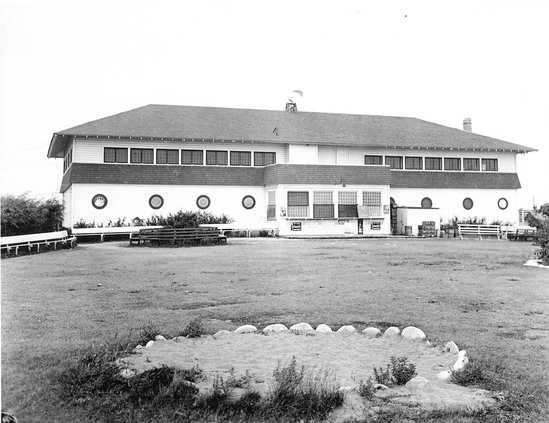
By January 1925, a “Bathing Beach” was being reported as a new attraction for the coming summer, while the Hoisington Golf Club was being expanded on the adjacent property. That year, the large bathhouse and dance pavilion, along with the caretaker’s house, were constructed, with the club providing materials and the members providing the labor; the entire project cost $8,866.32.
The Hutchinson News boasted 700 members on Nov. 7, 1928, stating that the club had a fine clubhouse, dance pavilion, boating, swimming, fishing, tennis, croquet, golf course, water sports in season, and skating in season. It was a “fine, pleasant place for a hot afternoon. Fine home for parties and other things in mid-winter season.” The editor was especially impressed that it was located on State Highway No. 3, which was sanded from Great Bend to Hoisington, making access to the club perfect.
One of the fondest memories of Lake Barton was added in 1933: the family of monkeys, which were still remembered by those in the 1950s.
The Hutchinson News announced on Feb. 18, 1941, that an “80-foot dam will be built at the Missouri Pacific’s large lake, Lake Barton … to form a new lake.” The dam would be 36 feet wide at the bottom, and the contract was awarded to Chas. Hulme of Great Bend.
In March 1947, the Hutchinson paper announced that the club would soon be sold by the railroad, likely be sold to members of the club. Membership was nearly 1,000 by this point. The sale of the club was precipitated by the fact that the Missouri Pacific was replacing the steam locomotives with diesel power on the line between Kansas City and Pueblo, Colorado. This also meant that Hoisington might lose the Mo-Pac shops, which would be useless after the changeover. The railroad would negotiate a sale of the lake when it determined it was ready to sell. By the spring of 1948, the railroad had advised Ray Smith, club secretary, of its intent to sell the property to the club with no strings attached. The club would have to purchase electric pumps to keep the lake filled at its present level at a cost of $7,500, although the pumps need not be as big as they were originally, because the railroad was no longer taking water out of the lake.
A quitclaim deed was filed in the Barton County Register of Deeds Office on March 13, 1950, stating that the Missouri Pacific Railroad was selling the lake property and the Walnut Creek Dam to the Barton County Club for $17,575, except for the mineral rights, which the railroad would retain. The club continued to prosper after ownership of the real property was transferred. In May 1955, “A face-lifting has been undertaken by the Barton County club.” The water level was lowered to make repairs to the dams surrounding the lake, and the south dam was completely rebuilt. Other improvements included a new steel and wood diving tower, a floating dock, a separate fishing dock, and a new road to allow traffic to access the picnic area directly. Additionally, many trees and shrubs were planted to provide shade for the members. At the same time, playground equipment and new picnic tables were added.
In the ensuing years, the club prospered throughout the 1960s, and in the 1970s it was discovered that neither the railroad nor the club had secured a water right to pump water out of the Wet Walnut Creek, so they could no longer pump water from the creek. The lake was allowed to dry up and now has renewed life through the trails that have been established for hiking and mountain biking. The new Barton County Trail Association has formed a National Intercollegiate Cycling Association mountain bike team of middle and high school students from the area and is utilizing the trails in the dry lake bed, which once was an oasis on the plains.
Justin Engleman is the executive director of the Barton County Historical Society in Great Bend.