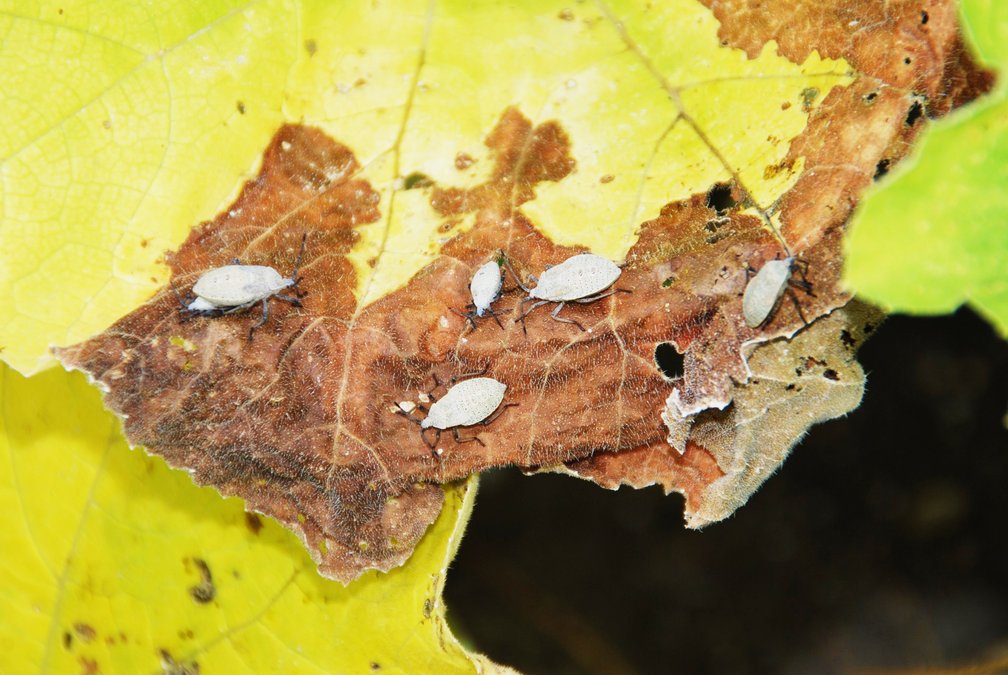
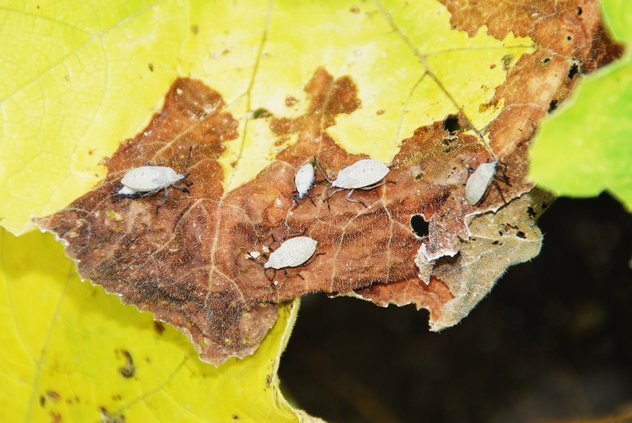
When growing pumpkins, squash, gourds and melons watch for the squash bug. Their feeding damage can cause leaf spotting, damage to the fruit and in severe cases wilting of the plant.
This insect overwinters as an adult in sheltered locations under plant debris, rocks and around buildings. The ½ to ¾” gray or dark brown adults emerge in spring and begin feeding, mating and laying eggs on plant members of the squash family.
Both adults and immature nymphs move quickly and shelter under the leaves during the day. Female squash bugs lay up to 200 eggs in clusters on the underside of leaves. Look for the eggs, often where the veins meet forming a V, and crush them to help manage this pest. There may be eggs, nymphs and adults on the plants at the same time so watch for and be prepared to manage all stages as needed.
Keep plants healthy as older, sturdier plants are more tolerant of their feeding. Consider growing these plants on trellises where the plant tends to be less susceptible to this pest.
Manage weeds, remove plant debris and avoid straw mulch that can provide hiding spots for squash bugs.
Trap these insects by placing boards on the ground near the plants. These insects will congregate under the boards overnight. In the morning lift the boards, collect the insects and drop them into a can of soapy water.
Grow blue Hubbard squash as a trap plant for both squash bugs and squash vine borers. Plant this squash three to four weeks prior to other members of the squash family and at the perimeter of the garden at least several feet away.
Both insects prefer the blue Hubbard squash, focusing their feeding on this plant instead of desirable plants. Do continue to monitor the other squash plants as well.
Placing floating row covers over seeds and transplants at planting can help reduce the risk of both squash bugs and squash vine borer. Loosely cover the planting area and secure the row cover edges to keep these pests out. Use this method where these insects were not previously a problem. Remove the cover as soon as female flowers appear for pollination and fruit formation to occur.
Rotating plantings, if space allows, is an excellent way to reduce the risk of these and other insect pests and diseases. Crop rotation involves growing a series of unrelated crops in the same area over several years. Clean up the garden in fall by removing weeds and plant debris that can provide winter homes for this pest.
Monitor this insect and employ the appropriate eco-friendly management strategies to help ensure an abundant harvest. These efforts will be rewarded with plenty of produce to enjoy and share with others.
Melinda Myers is the author of numerous books, including Small Space Gardening. Myers web site is www.MelindaMyers.com.