Life is difficult.
I do not think there is much value in pretending otherwise.
Regardless of what is going on around us, though, I still believe something good can be built from what’s difficult. The greatest need we have in the middle of the chaos is not simply to change what is happening or even to change what we say or do. Before any of that, we have to decide what we are going to believe in the midst of it.
One of our greatest needs during difficult seasons is not to convince ourselves that life is supposed to be better than this. It is to decide what we believe while life is hard.
Because the way our lives unfold has a funny way of revealing what we truly believe.
I have been thinking about this a lot lately because this has been a difficult season for me personally and professionally. There have been moments when I have caught myself saying things I would not have said five or ten years ago. Things about how difficult people can be. How frustrating it is when someone does not follow through. How exhausting it can become when the same problems keep showing up.
Somewhere in the middle of this, I keep reflecting on a conversation from several years ago.
I was sitting with seven or eight lawn-care owners at an event in Florida when the conversation turned to how difficult their employees were. One owner in particular was leading the charge, complaining about employees being late, not caring, breaking equipment, and failing to take responsibility. Everyone at the table nodded in agreement, chiming in and sharing their stories. Eventually he nudged me and said, “You know how it is, right?”
I looked at him and said, “Well, not really.”
That was probably not the answer he nor the table was expecting.
I asked him if he had ever considered that if he believed something different about his team, they might produce something different. I told him maybe he should spend a little more time looking at the leadership of the company instead of simply blaming the people inside of it.
As leaders, if something continues happening within our organizations, eventually we have to acknowledge that we are either allowing it to continue or somehow contributing to the environment that produces it.
That pretty much ended the conversation and I probably wasn’t the favorite person at the table after that.
Looking back, I still believe what I told him. But today, I understand him a whole lot better.
Life has a way of doing that to us.
I love our company, and I am incredibly proud of the people who have helped build it. This season has not changed that. What this season has done is challenge me to examine how I lead when life outside of work becomes heavy.
There have been moments when I have wondered why something was forgotten, why a responsibility was missed, or why something that seemed obvious to me did not seem obvious to someone else.
And I have had to be careful about what I allow myself to believe in those moments.
I could start believing that people simply do not care. I could believe that nobody will ever care as much as I do because they do not own the company. I could believe that people are irresponsible or that they will always disappoint me.
Then every mistake becomes evidence.
Someone forgets something ... . See, I knew it.
Someone is late ... . There it is again.
Someone fails to follow through ... . Another example.
Before long, I would no longer be leading people. I would be gathering evidence to support something I had already decided to believe about them. And honestly, if I lived from that belief long enough, I might eventually prove myself right.
But this is not just a business problem.
We do the same thing in our marriages, families, friendships, churches, teams, and communities.
Once we decide what we believe about someone, we tend to start noticing anything that supports it.
If I believe my spouse never listens, I notice every moment when I feel unheard. If I believe my child is irresponsible, every mistake becomes proof. If I believe a friend does not care, every missed call begins to mean something.
That is what makes what we believe so important. What we believe influences what we notice. It influences the questions we ask, the conversations we have, and whether we respond with curiosity or accusation. It influences whether we teach, confront, encourage, forgive, or simply complain.
That does not mean we ignore problems.
I have tried for years to hold a pretty simple line. I believe the best in people. I trust first. When something damages that trust, I believe we should face it quickly, directly, and intentionally.
Believing the best in people does not mean pretending everything they do is acceptable. Trust does not mean avoiding difficult conversations. Grace does not mean removing consequences.
Sometimes believing the best in someone means refusing to accept less from them than what we believe they are capable of. That applies to me too.
As I have looked more closely at this season, I have had to admit that some of the challenges I have felt more deeply within our company have been affected by my own lack of emotional presence during some very difficult things life has thrown at me.
I am just a man. I can get tired. I can become distracted. I can carry pain into a room without realizing I brought it with me. I can be physically present while some part of me is somewhere else.
And if I want others to remember that I am human, then I have to remember that about them too.
The people around us have lives we may know very little about. They have marriages, children, parents, bills, fears, losses, disappointments, and private struggles.
That does not remove responsibility. Hard circumstances do not give any of us permission to ignore how our choices affect others. But they should give us compassion.
I can hold someone accountable without deciding their mistake tells me everything there is to know about them. I can believe the best in someone and still expect better. I can offer grace and still expect responsibility.
Maybe that is part of what belief asks of us. It asks us to decide what we are going to believe before disappointment decides for us. It asks us not to allow someone’s worst moment to tell us everything we believe about them. It asks us to decide who we are going to become before hardship convinces us to become someone else.
Life is difficult.
People will disappoint us. We will disappoint other people. Things will break. Plans will fail. Relationships will become strained. There will be seasons when we look around and think, “This is not how I thought things were supposed to go.”
Maybe the problem is not that life failed to follow the plan. I am learning that sometimes the problem is believing our plan was the only way something good could come from it.
I still choose to believe the best in people. I still choose to trust first. I still believe accountability matters. I still believe compassion matters. I still believe people can grow.
And regardless of what is happening around me, I still believe something good can be built from here.
In the end, the way we live will reveal what we truly believed all along.
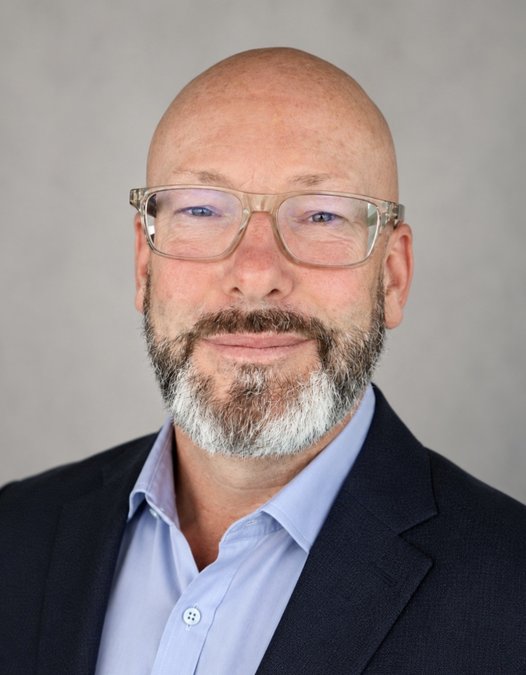
‘Well Rooted’ is written by Jeremy Elliott. Elliott owns a lawn-care business and lives in the Great Bend area.