City mulls sales tax request
During a work session on the cost of improvements to the Wastewater Treatment Plant, the Great Bend City Council learned that paying for the improvements with no additional funding sources could require customers to see their sewer bills increase by $15 a month or more in the future.
Mayor Alan Moeder said he and City Administrator Logan Burns have discussed asking Great Bend residents to approve a new half-cent sales tax at the next general election.
“We’re wanting to put a half-cent sales tax up to vote in November; a quarter of that would be property tax (relief); the other quarter would go for infrastructure, which would be sewer, water and storm sewer, strictly,” Moeder said. “So if we can get some grants, and the city would pass that sales tax, we may not raise rates at all, which would be great.”
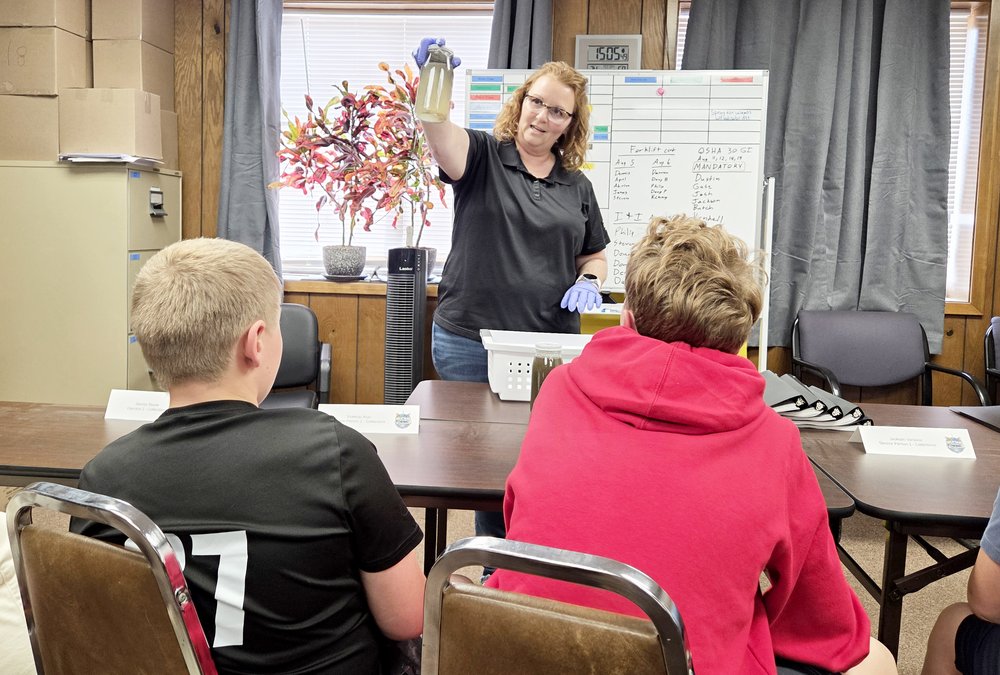
A study of Great Bend’s Wastewater Treatment Plant shows major renovations are needed, costing $20 million or more. The City opened the plant for a tour on Monday and the City Council conducted a work session that evening after the regular meeting.
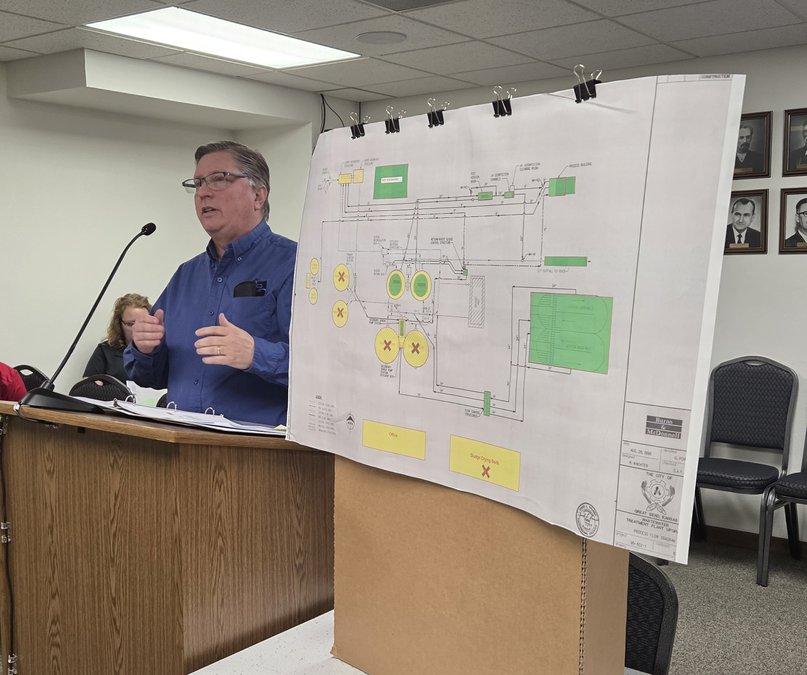
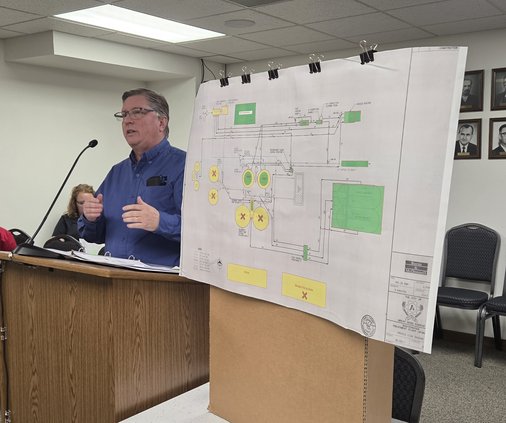
During the work session, Roger Protzman, PE, with engineering firm JEO Consulting Group Inc. walked the council through the 127-page draft of the 2025 Water Resource Recovery Facility Report. Also present was Michael Schultes, PE, with JEO.
According to the City’s website: The City of Great Bend Wastewater Treatment Facility is a secondary treatment facility that processes approximately 1.2 million gallons a day of domestic and industrial wastewater to EPA and Kansas Department of Health and Environment specifications. The treatment process allows the recycled wastewater to be returned to the Arkansas River without harm to the aquatic life or the environment.
The plant was built in 1954 and went through major upgrades in 1981 and 1997. The facility was featured in TPO (Treatment Plant Operator) Magazine in 2021 and a link to that article can be found on the City website.
Protzman said the staff have done a good job of running the facility and keeping it in compliance with permits.
“The debate begins on how much money should we put into something that’s old versus starting over,” he said.
Some items that are 70 years old are still part of the treatment facility, Protzman said. As for items completed in 1996 and 1997, “you’re right at that 30-year mark for those items, and the objectives for your treatment system in the 1950s is different that your objective today. Back then, we were basically trying to take the sludge out of the wastewater. ... Nowadays, we’re looking at what we call micro-nutrient removal; we’re looking at things like ammonia, total nitrogen, total phosphorous.”
According to the 2025 study, JEO’s recommendations for infrastructure improvements will meet the City’s projected needs through 2045.
Priority 1 improvements, according to the recommendations, start with replacing the headworks, a $9.24 million project, along with seven other updates that bring the total to $20.3 million. If no additional funds were available (such as grants, no-interest loans and a possible sales tax), financing this over 30 years would create an added yearly expense of $1,188,835, resulting in a monthly increase in the sewer bills of $15.33 per customer.
If all of the improvements were adopted (Priority 1, 2 and 3), the probable capital cost would be $26.7 million and the monthly increase per customer (with no new funding sources) would be $19.96.
JEO is available to assist the city in further planning steps and ultimately the development of design documents, Protzman noted.