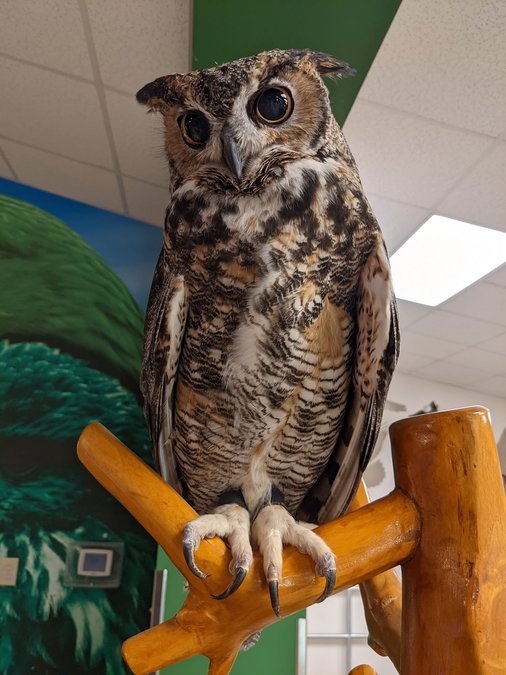
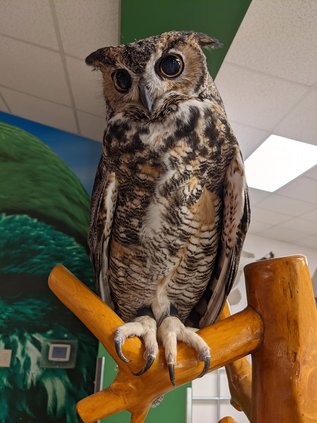
On Friday, Jan. 2, the Great Bend Brit Spaugh Zoo staff announced the loss of longtime animal ambassador Thurston the owl. Zoo Director Ashley Burdick’s post on the zoo’s Facebook page read:
It is with heavy hearts that we share the passing of Thurston, our Great Horned Owl. Thurston resided at the zoo for the past 25 years, where he participated in educational programs both on-site and throughout the community in partnership with the Kansas Wetlands Education Center. He touched the hearts of all who had the privilege of meeting him.
Thurston was found as a chick by a family who cared for him for 10 years before he came to the zoo. During those early years, he lived among chickens, earning him the affectionate nickname “Chicken,” as he would occasionally cluck and stand more like a chicken than a Great Horned Owl. He also sustained an eye injury that affected his vision. Due to this injury and his imprinting on humans, Thurston was not a candidate for release back into the wild.
He greatly enjoyed spending time with his keepers and was even known to share his dinner with them – whether they wanted mice or not. His favorite enrichment items included packing paper balls and squash, which he delighted in shredding into tiny pieces. Thurston also loved time spent on the glove with his keepers, watching the wild geese in the park.
In recent years, Thurston’s vision in both eyes gradually deteriorated, impacting his mobility and comfort with participating in programs. As a result, he spent his final years in retirement. For all of our geriatric animals, we closely monitor factors such as mobility, activity levels, food intake, and engagement with keepers to observe trends in welfare and make decisions that are in the best interest of the animal. Our animals are family to us, and we are committed to ensuring their comfort and quality of life. Thurston will be deeply missed by his past and present keepers, as well as by the many individuals who met him through our programs.
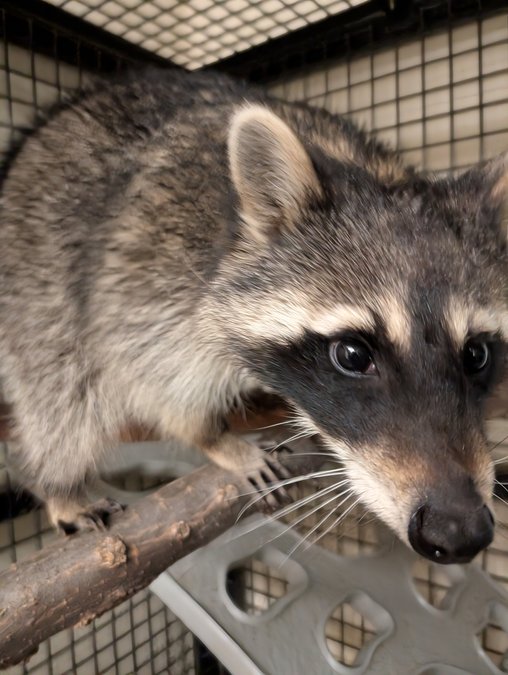
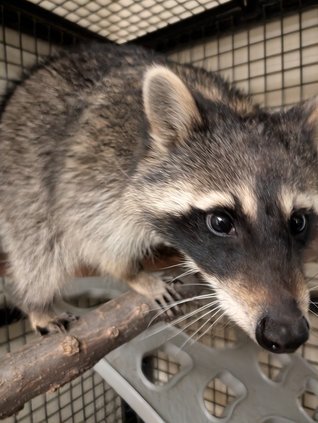
Reggie the Raccoon arrives
Burdick also reported on a new arrival at the zoo.
“We recently welcomed a juvenile raccoon to our zoo collection,” she said. “His name is Reggie and he is under 1 year old. Unfortunately, he had been kept illegally by a private individual. At this time, Reggie is living off-exhibit while he continues to grow. Once he is a bit larger, he will be moved into an on-exhibit enclosure for public viewing.
“Raccoons are extremely intelligent animals, but they are also highly destructive, skilled escape artists, and can become aggressive – traits that make them unsuitable as pets. It’s important to note, with animals like Reggie and Thurston, that if you encounter young or injured wildlife, they should be taken to licensed rehabilitation facilities. Wildlife rehabilitators have the knowledge and resources to care for these animals properly, ensuring they do not imprint on humans and can eventually be released back into the wild where they belong.
“Once an animal becomes imprinted on humans, it will continue to seek them out for food and is often unable to hunt or forage independently. Sadly, these animals may ultimately need to be euthanized, as they can pose risks to people and domestic animals through conflicts, bites, and the potential spread of zoonotic diseases. While we understand that most people have good intentions, failing to bring wildlife to appropriate rehabilitation facilities can unintentionally jeopardize the animal’s survival.”