

EDITOR’S NOTE: This is the first of two articles about High-Risk Teams. Today’s story shares comments from the Family Crisis Center and Pawnee County EMS. The second will focus on law enforcement.
After a visit with Pawnee County Sheriff’s Det. Jacob Robison, representatives of the Family Crisis Center (FCC) didn’t hesitate to follow through on his idea.
Robison had attended a specialized training session where he learned about High-Risk Teams (HRTs) and their approach to domestic violence, said Aimee Peschka, FCC executive coordinator of programming.
“We were immediately open to researching how to form an HRT,” Peschka recalled. “Since Pawnee County was already on board, it was logical to start there.”
The HRT screening tool is called a “lethality assessment.” It is an evidence-based resource used by law enforcement to recognize warning signs of potentially lethal domestic-violence incidents.
The assessment consists of 17 yes/no questions that help determine risk.
“This approach helps to identify and respond to the most dangerous situations before they escalate to serious injury or homicide,” Peschka explained. “Once officers identify high risk, they can immediately connect the victim to our advocacy services, shelter resources and ongoing support.”
An HRT brings together multiple professionals in the areas of victim advocacy, law enforcement, prosecution, probation and health care.
- “We coordinate information, monitor high-risk offenders and focus on victim safety,” Peschka said. “This team approach results in early intervention, reduces gaps in services and increases accountability for offenders.”
- The Pawnee County pilot program has strengthened partnerships between first responders and the FCC, which means quicker response times.
- “The HRT also helps reduce the number of times survivors have to tell their stories,” Peschka commented. “The lethality assessment is presented to the county attorney, which has resulted in higher bond amounts for offenders.
“Our progress stems the foresight of Pawnee County first responders,” Peschka emphasized. “Officers TJ Hearn and Jacob Robison, and paramedic Kara Lawrence have dedicated their time and expertise to forming an HRT.”
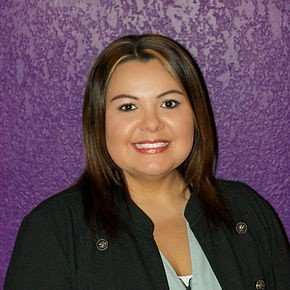
Kara Lawrence
In addition to being a paramedic and RN, Lawrence has S.A.N.E training; the acronym stands for Sexual Assault Nurse Examiner.
Because of this background, she contacted the Larned and Pawnee County officers, asking them to attend strangulation training sponsored by the Kansas Coalition Against Sexual & Domestic Violence. Even though it was designed for the medical profession, law enforcement was welcome too.
Lawrence agreed with Peschka that the lethality assessment is a crucial aspect of the HRT because it provides an ideal way to determine the possibility of further risk to the victim.
“In high-adrenaline situations, our emotions overtake our capacity to rationalize details,” she said. “This results in decisions based on feelings versus facts. The assessment offers a simple, black-and-white process to get information that demonstrates to us and to the victims their level of risk.
“We must have a clear way to get past their fight-flight-freeze mindset. When you can hold a piece of paper that outlines the risk, it is easier for them to agree to get outside resources. It also guides law enforcement to the next steps to take on behalf of the victim.”
Lawrence views the HRT as several entities uniting to care for the whole person - physically, mentally, spiritually and emotionally. While she helps ensure medical care is available, law enforcement collaborates with the court system and the FCC is there to provide advocacy services.
“I cannot express enough the vital role of the Family Crisis Center,” Lawrence said. “They move quickly so that the victim has an advocate at their side shortly after arriving at the Emergency Department.”